"Let me state that without my notes Shade's text simply has no human reality at all since human reality of such a poem as his (being too skittish and reticient for an autobiographical work), with the omission of many pithy lines carelessly rejected by him, has to depend entirely on the reality of its author and his surroundings, attachments and so forth, a reality that only my notes can provide. To this statement my dear poet would probably not have subscribed, but, for better or worse, it is the commentator who has the last word" (Nabokov 28-29).
I feel I have been deceived a little. My first obvious point has been staring me in the face from the preface to the back cover, but I didn't want to see it. It's like how I knew my parents were Santa and the tooth fairy and the Easter bunny, but I didn't care to acknowledge it until forced to. Going back to our conversation in class-- I like lies.
John Shade is not real.
I knew this, but didn't know this, and I'm in shock, a little. I shouldn't be. I got through the foreward and a bit of the first canto, and I was thinking I was reading it weird. Like it was just a poem written by a dead guy. I typed in John Shade on the computer, google-ing him for confirmation. He's not real, and I feel like he's died all over again- which is weird that I would be sad, because I don't know him. . . yet. Maybe I won't feel so bummed when the poem is over.
Wednesday, October 19, 2011

Monday, October 17, 2011
Another mirror

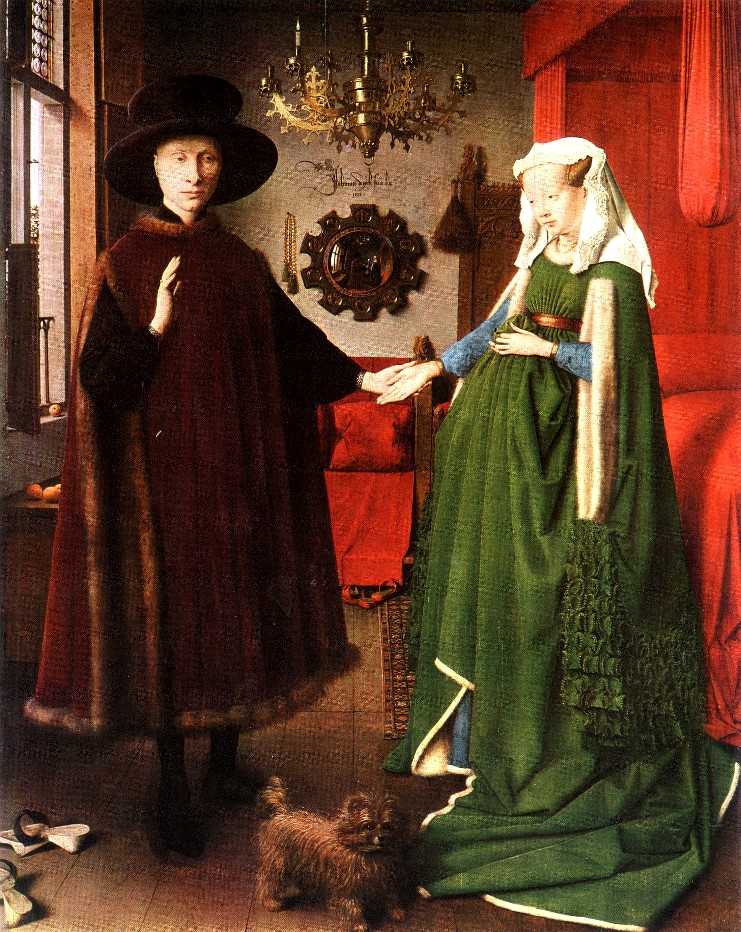
Foucault take one-- reflections
I have a confession to make. I looked long and hard for Foucault sparknotes, enotes, Foucault for Dummies--- anything to help make my scrambled notes from the book and Dusty's lecture make sense. I took four/five pages of notes from Dusty's talk, and I felt super smart at the end of the class, but at the end of the day, combining those to the few pages I read of the book, I was chilling in chaos.
I did find some lecture notes online, which proved to be a little helpful. They are still confusing-- a bit-- but they are helping me decipher some of my notes, giving me a light bulb moment with the Las Meninas chapter. I underlined these three lines on page 7: "it is a mirror. . . the painter is unable to see this looking glass shining so softly behind him. . .It is reflecting nothing." The guy's lecture (his name is John Protevi from LSU-- I posted the links below) says, "The Classical Age, based on representation, cannot represent representation to itself. It cannot see the light by which it sees; the fish cannot know it lives in water. Only historical difference can highlight the pre-suppositions of an age." He talks about a mirror in room taking in painter, the painted and the painting, the mirror (mimesis) can't reflect the situation. James talked about the mirrored image in the Velasquez painting in his blog. The "objective" observers (us) can see the images of the king and queen in the mirror, but those images are totally ignored by the spectators in the painting. He suggests that the people milling around are the true focus of the painting. I guess I'd agree in that they are in the focal spot of the piece. They are the brightest objects of the darker room, and their action draws the eye. But what I like about the mirror is that it wasn't the first thing I saw. The subjects of the mirror are nowhere to be seen, but I think it's possible that you can't see them, because they are not there. The mirror is the reflection of the painting the painter is working on. The objective viewer is not really us, it is the king and queen looking onto their subjects, looking at the mirror, which reflects the painting, which is a representation of them. Thus, the viewer is not really objective. That lack of objectivity goes back to the structure and language, but I can't explain.
But thinking of James' comment on the periphery, I like the guy hanging in the stairwell. He's such a creeper, hanging in the stairwell, but I like how the doorway frame mimics the frames of all the other paintings in the room. It's like the man in the doorway is also a painting, and that painting must be significant, because like the focal point of the room, it is also lit.
The links to the lecture notes:
http://www.protevi.com/john/Foucault/PDF/OT_I.pdf
http://www.protevi.com/john/Foucault/PDF/OT_II.pdf
I did find some lecture notes online, which proved to be a little helpful. They are still confusing-- a bit-- but they are helping me decipher some of my notes, giving me a light bulb moment with the Las Meninas chapter. I underlined these three lines on page 7: "it is a mirror. . . the painter is unable to see this looking glass shining so softly behind him. . .It is reflecting nothing." The guy's lecture (his name is John Protevi from LSU-- I posted the links below) says, "The Classical Age, based on representation, cannot represent representation to itself. It cannot see the light by which it sees; the fish cannot know it lives in water. Only historical difference can highlight the pre-suppositions of an age." He talks about a mirror in room taking in painter, the painted and the painting, the mirror (mimesis) can't reflect the situation. James talked about the mirrored image in the Velasquez painting in his blog. The "objective" observers (us) can see the images of the king and queen in the mirror, but those images are totally ignored by the spectators in the painting. He suggests that the people milling around are the true focus of the painting. I guess I'd agree in that they are in the focal spot of the piece. They are the brightest objects of the darker room, and their action draws the eye. But what I like about the mirror is that it wasn't the first thing I saw. The subjects of the mirror are nowhere to be seen, but I think it's possible that you can't see them, because they are not there. The mirror is the reflection of the painting the painter is working on. The objective viewer is not really us, it is the king and queen looking onto their subjects, looking at the mirror, which reflects the painting, which is a representation of them. Thus, the viewer is not really objective. That lack of objectivity goes back to the structure and language, but I can't explain.
But thinking of James' comment on the periphery, I like the guy hanging in the stairwell. He's such a creeper, hanging in the stairwell, but I like how the doorway frame mimics the frames of all the other paintings in the room. It's like the man in the doorway is also a painting, and that painting must be significant, because like the focal point of the room, it is also lit.
The links to the lecture notes:
http://www.protevi.com/john/Foucault/PDF/OT_I.pdf
http://www.protevi.com/john/Foucault/PDF/OT_II.pdf
Monday, October 10, 2011
Two truths and a lie
Truth 1: I did try out Prof. Sexson's challenge and lied to a loved one. I am the world's worst liar, so I spent three hours setting up the stage for the lie, making Joe think there was something weighty on my mind that I had to tell him. The lie itself didn't really compare to the three hours of him thinking something was seriously wrong. He's not terribly pleased with this class.
Truth 2: I was reading Sarah's blog about truth and lies, and I thought it was kind of neat that she brought up the Matrix, and how people escape from a dream world to a reality, because I was thinking about the same thing, but in an inverse kind of way-- I was actually wondering if dreams are the true reality we aspire to reach. When we did our debate, I thought lies are good for the day, but truth is for the night. Hedvig is the baby troll sneaked into the human nest, raised as their own. Her existence is the lie; but the lies in the house are merry ones. They are happy with an attic full of wild game, grandfather, son/wife, daughter. Maybe it is what they always dreamed of having or desired to have. Their dreams are their lies.
Lie: Fiction. I just finished Nafisi's book- she uses it a debating ground for the purpose and use of fiction. The Iranian government thought it should mainly be used as a vehicle for propaganda, but that seemed like such a literal and narrow minded view of the word. Nafisi thought fiction existed to make us question the "fragile unreality" we live in. Or not question really, but challenge? "We speak of facts, yet facts exist only partially to us if they are not repeated and re-created through emotions, thoughts and feelings. To me it seemed as if we had not really existed, or only half existed, because we could not imaginatively realize ourselves and communicate to the world." So "reality" isn't really real until we challenge it, rehash it, relive it and own it. We take what we see and re-create it into a kind of fiction.
I'd agree with Sarah that you can't truly peel truth from lies. Those ideas are interconnected by imagination; even if you try to crack that nut with every scientific discipline, with tons of facts, I just don't think you could really separate them.
Truth 2: I was reading Sarah's blog about truth and lies, and I thought it was kind of neat that she brought up the Matrix, and how people escape from a dream world to a reality, because I was thinking about the same thing, but in an inverse kind of way-- I was actually wondering if dreams are the true reality we aspire to reach. When we did our debate, I thought lies are good for the day, but truth is for the night. Hedvig is the baby troll sneaked into the human nest, raised as their own. Her existence is the lie; but the lies in the house are merry ones. They are happy with an attic full of wild game, grandfather, son/wife, daughter. Maybe it is what they always dreamed of having or desired to have. Their dreams are their lies.
Lie: Fiction. I just finished Nafisi's book- she uses it a debating ground for the purpose and use of fiction. The Iranian government thought it should mainly be used as a vehicle for propaganda, but that seemed like such a literal and narrow minded view of the word. Nafisi thought fiction existed to make us question the "fragile unreality" we live in. Or not question really, but challenge? "We speak of facts, yet facts exist only partially to us if they are not repeated and re-created through emotions, thoughts and feelings. To me it seemed as if we had not really existed, or only half existed, because we could not imaginatively realize ourselves and communicate to the world." So "reality" isn't really real until we challenge it, rehash it, relive it and own it. We take what we see and re-create it into a kind of fiction.
I'd agree with Sarah that you can't truly peel truth from lies. Those ideas are interconnected by imagination; even if you try to crack that nut with every scientific discipline, with tons of facts, I just don't think you could really separate them.
Tuesday, September 27, 2011
Child's Play
Thinking about our discussion in class and reading through Doll's House again, I do believe I know these people- Nora and Torvald- because I remember that I met them before.
This summer I was a nanny to four year old twins and a baby.
The twins, a boy and a girl, were
masters of pretend. Every day, I was
treated to performances of superhero saving the princess from the tower, prince
fighting monsters while damsel in distress watches on, baby boy and his mom
going to the park, monkey and best friend girl hanging out at the pool, and so
on. It was an entertaining job.
Some days were more Disney fairy tale-like, but other
performances were absolutely melodramatic.
One morning, I remember the twins were Spider-Man and princess, and
Spider-Man was dying on the couch. He
pulled the princess in close so she could hear his last labored words and then
he kissed her. I am such a bad person,
but I laughed. It was heavy material for
little kids, and they kissed. I know
they are little and are definitely innocent, but I don’t know. The little girl blushed and came up to me and
told me, “Miss Bizz—What?? it’s just pretend.”
The other nanny and I shared a glance, and I told her nothing was wrong,
I just couldn’t imagine kissing my brother like that (the brother nearest to my
age is 6 years older than me). She
anxiously told me that they kissed all the time, because they had to. She was the princess and he was the superhero—she
had to. It’s what superheroes and
princesses do. Her brother, in the meantime, was moaning in the background,
begging her to return to the game as he bled to death (I think he was bleeding
to death, I don’t remember his cause of death that day). The little girl looked torn and confused, and
eventually, she walked over to her brother and said, “Don’t be mad, I just don’t
want to kiss you.” He jumped up and
said, “But I love you!” and he proceeded to chase her around the room so he
could kiss her face.
Even though I wasn’t intentionally trying to kill their
game, I felt a lot like Kristine observing her friend Nora and trying to make
her leave the illusion she and the guy created for themselves, I showed the
little girl “real sunlight” and she kind of woke up. The boy kept trying to cling to that aspect
of the game, because he felt that was how it should be, but she could not
unknow what she now knew.
And I know this doesn’t relate to the Doll’s House,
but I remembered this incident, because of our class discussion of the anagram “Insect”
and “incest.” And I don't know where to go with that.
***** Adding on, I was just thinking now that Ibsen observes characters like a nanny to children. He observes how the characters observe other characters to understand how they think people should act. Who we are and what we do is just a copy of the person we observed, who was just a copy of someone else and so on. I am not me- I am composed of several observations I have made from other people. Is that how the disease spreads? And what is the disease? Mob instinct/herd instinct? The need to cling together? A desire for "normalcy" whatever it is? I don't think it's our existence at any rate. I hope.
***** Adding on, I was just thinking now that Ibsen observes characters like a nanny to children. He observes how the characters observe other characters to understand how they think people should act. Who we are and what we do is just a copy of the person we observed, who was just a copy of someone else and so on. I am not me- I am composed of several observations I have made from other people. Is that how the disease spreads? And what is the disease? Mob instinct/herd instinct? The need to cling together? A desire for "normalcy" whatever it is? I don't think it's our existence at any rate. I hope.
Monday, September 26, 2011
I can't see how Ibsen is a Scientist, but I can science in the play
Morten Kiil (resting his hands and his chin on the handle
of his stick and winking slyly at the DOCTOR). Let me see,
what was the story? Some kind of beast that had got into
the water-pipes, wasn’t it?
Dr. Stockmann. Infusoria—yes.
Morten Kiil. And a lot of these beasts had got in, according to Petra—a tremendous lot.
Dr. Stockmann. Certainly; hundreds of thousands of them,
probably.
Morten Kiil. But no one can see them—isn’t that so?
Dr. Stockmann. Yes; you can’t see them. (ACT II, Scene I EOTP)
When we read the Biographer's Tale and talked about Ibsen, I expected his play to ooze objectivity and science lingo. I'm glad to find that that wasn't the case at all. Science is the subject of interest, but the real action revolves around politics and societal conformity. It was an interesting commentary on the individual versus the majority, but I'd have to agree with Maria, that I don't quite see how referring to bacteria makes him a scientist on the same level of Linnaeus and Galton. He might have grouped his characters into different stereotypes, (classified them, so to speak), but he seems to do so with prejudice. The young are generally liberal, the older women are domestic and subservient and the men are . . . men. Stockman has a crazy beard and is a crazy man.
I think this passage above might be a link between Ibsen, science/bacteria and his study of humans. The tone mocks science, reducing it to the stuff of myth. "No one can see them-- isn't that so?" He sheds doubt on the situation by bringing up faith, the mentality of "even though we can't see it, we believe it is still there?" It sounds funny, because we often think of science as irrefutable stuff. Stockman tested his water samples. He had his chemist friend confirm his suspicions. And his father-in-law, who makes fun of the bacteria is weird and probably not a legit source. But I like how this seed of dialogue foreshadows how everyone will accuse Stockman of lying. They are afraid of what his science means and they kind of hunt him like he's a witch.
And now, I'm thinking a *Lightbulb*
Stockman discovers something and wants the discovery to speak for itself (even though he has a crazy man's agenda pushing that discovery forward). It is possible his discovery is fabricated. . . maybe not. But Mr. Peter the Mayor pushes his own report through the paper, which doesn't just discredit Stockman, but also conforms reality to his idea of what the Baths should be. And this reminds me of a book I'm reading called, "Reading Lolita in Tehran," when the narrator discusses Nabokov's novels and how "there was always the shadow of another world, one that was only attainable through fiction." She talks about Humbert and other men in her life who have tried to "shape others according to their own dreams and desires." Humbert is all imagination and craft. He reinvents Lolita's history and person to suit him. He creates, but he also imposes. I feel like Peter Mayor is like him in that respect. He can calm the storm of people and channel it to do his will. But I'm not sure that the play is a celebration of man-made power over scientific discovery.
I think Dr. Stockman is the protagonist, because he is the true man of science trying to make his crazy discoveries heard. He's the underdog. He's like the time traveling scientist in Kate and Leopold. "It is no more crazy than a dog finding a rainbow. Dogs are colourblind, Gretchen. They don't see colour. Just like we don't see time. We can feel it, we can feel it passing, but we can't see it. . . .And that's it; it's that simple. That's all I discovered. I'm just a... a guy who saw a crack in a chair that no one else could see. I'm that dog who saw a rainbow, only none of the other dogs believed me."
There is a connection of science and what's going on, there is some kind of relationship between discovery and creation, but I'm still not sure how Ibsen's bacteria observation skills are evident in his method.
*Disclaimer-- I have never read Lolita, just Reading Lolita in Tehran.
Monday, September 19, 2011
Peeling the Onion, trolls are a lot like ogres
"Or two identical onions? But you can peel them, layer after layer, down to the centre, down t the juicy quick, and, just as you tear into that, and the last bit of onion-juice stains your fingers, they resemble each other-- enough." pg 105
When I first read this, I thought, "Ah, I guess we are not all exactly the same soul-wise, but we are similar in nature, but we are all shrouded in the same kind of complex layers." And then I thought of Shrek, especially as Ibsen's portions of the Biographer's Tale are peppered with troll references. (I guess trolls are similar to ogres, but they tend to be more aggressive and territorial- says Wikipedia and fairy tales). I think both points- onions and trolls- have something to do with how Ibsen lives as a scientist/ observer.
Onions testify to Ibsen's more scientific nature. He wants to observe every aspect of human nature, but so much occurs internally. He can't watch the brain and the soul at work. He needs to peel the physical layers away to peer "doubtless into the cavern of the skull. The scalp and the features were rolled back like the skin of an onion" (170). On that level, people are not what we think are people. Instead they are simply objects (things, I guess), which Ibsen can break open to see the source of imagination and thinking. "SP: But, my dear sir, consider. It's to your advantage. I'll open you up and let in the light. I want to discover the source of your dreams. I want to find out how you're put together. pg 176." I'm not sure Ibsen is truly thinking of breaking human skulls apart (or waiting for them to fall apart) in order to have a looksy into the mind, but he does mean to delve deeper to go beyond the "Stranger on a Train" acquaintance with his characters. He has to piece together their psyches with as much precision and care as a clockmaker, which means he has to fully comprehend each part and how it functions (very scientific of him).
But then comes in the trolls. I think it is interesting that he incorporates the fairytale myth of the troll, because he sees the troll in himself. I looked up "troll" at http://www.mythicalcreaturesguide.com and got this definition: A troll is a fearsome member of a mythical anthropomorph race from Scandinavia, mostly Norway. Their role ranges from fiendish giants – similar to the ogres of England – to a devious, more human-like folk of the wilderness, living underground in hills, caves or mounds.depending on the type of troll (forest or mountain), the forest sometimes likes to hide or hybernate in deep springs or rivers. The mountain troll mostly likes to house in mounds or hills.
The way Ibsen talks about trolls in the BT makes me wonder why he sees the creature in his soul as well as in his face. "To live is to war with trolls in heart and soul" (94). I'm just not sure what he means by this. In some ways, he keeps his troll hidden from the world and only brings him out to write, to order/scientifically observe and dissect the people around him. It implies a deviousness in his methodical procedures. Later on in the chapter though, he talks about how he always keeps his troll hidden, to "keep it locked up inside, and that is why we sometimes seem to stand as if we were observing each other at a distance" (101). So, maybe he lets his inner troll, the impish aspect of his soul, control how he portrays his scientific observations, but he doesn't want anyone to know it is there, giving the subject the illusion that he is cold and detached?
He is tricky.

Subscribe to:
Posts (Atom)