As I flipped through all my notes from the semester, I noticed I had scrawled the word, "dyslexia," along the pages quite a few times. For me, it keeps popping up: mirrored writing, inverted letters, de-coding meaning, word play. (It doesn't hurt that my other class has been talking about the topic and my older brother is dyslexic) And as I read Pale Fire, hopping back and forth and all around, I remember thinking about how my brother Sam describes his "learning disability." He says the letters don't necessarily move to different places each time he looks at the page and not all the letters seem inverted, but they just aren't "really" there. He can see them on the page, but the meaning floats. It takes effort for him to pin it down.
A few times (wild moments of mine), I imagined Nabokov as dyslexic. I know he really couldn't be, because he was a novelist, but the way he plays with words and mirrors and images, it's like he has his own code, and rather than conforming to the "normal ways" of language, he's making readers conform to his. I have been lolling that idea in my head for awhile; and it turns out he does have his own code.
Nabokov is both a synaesthete and an eidetic imager. Synaesthesia is "an involuntary joining in which the real information of one sense is accompanied by a perception in an another sense" (Dann). He "hears" colors, or rather sound stimulants induce visual sensations (color). So, he can see music and words in color, and because visual cues, like color, are triggers for memory, Nabokov's was pretty fab. With that in mind, his memoir, "Speak Memory," makes a lot of sense, because he can "hear it" (and because he is an eidetic imager). Eidetic is closely related to synaesthesia, in that the person can recall a memory in vivid detail. Sight, and to a certain extent, sound, smell and taste, from a memory can be brought forward and experienced, felt. We could probably have sent Nabokov to fulfill that "sea" experiment weeks back, because he could not only experience it there, but he could probably have brought it back to the class. Though, I guess we still wouldn't have truly known what it was like, because it would have been all in his head.
There are some scientists (and the like), who attach terms like "dysfunctional," "imagined," and "distracting" to the synaesthesia and eidetic (Dann). They don't see the value in it, because whatever a synaesthete perceives is not perceived by anyone else (even amongst synaesthetes, the colors and sensations felt differ from
person to person-- one might hear "a" as a yellow, while another sees it
as green), and the reality of the perception is questioned. The eidetic images, from what I've been reading, seem similar to hallucinations. What is recalled is lived again in the moment, spilling into it and for some, lines can be blurred. But I find all of it- the sensory absorption, the memories and the experience- to be quite a gift. Whether or not I can truly understand or see the world from his viewpoint, Nabokov offers such a different perspective on the world we perceive to be true. He takes what we see as normal (which isn't normal for him-- and might be incomprehensible to others, who de-code differently) and flips it-- now he is norm, the knower and we are the ones who don't understand. It's an inverted world, cryptic and frustrating for us, but full of truths, we probably wouldn't have seen otherwise.
For my paper topic, I want to delve deeper into this realm of perception (de-coding) and reality; how what Nabokov experienced in his life is reflected in his main characters in Pale Fire and how his characters choose to project their perceptions, inverted shades and shadows, mirrors and glass, in or maybe as an "unreal" landscape.
Or something to that effect.
Dann, Kevin T. Bright Colors Falsely Seen: Synaesthesia and the Search for Transcendental Knowledge
Monday, November 7, 2011

Wednesday, November 2, 2011
The Red Admira(b)le
The Red Admiral belongs to the genus Vanessa and the family Nymphalidae.
Vanessa Atalanta
A butterfly website had a caption: "Red Admiral: Military Man Among the Ladies." I wasn't exactly sure what was meant by that until I looked deeper into Kinbote's lines "Vanhomrigh and Esther!" Esther Vanhomrigh was a lover of Jonathan Swift, who fictionalized her as "Vanessa" in his poem "Cadenus and Vanessa." The plot goes--- that nymphs and shepherds levy a complaint against Cupid, saying that he is not doing his job of spreading love everywhere. Cupid retorts that no woman is worth loving, because all women are vain and stupid. The nymphs were mad and the fighting went back and forth until Venus decides to experiment. She creates a "near perfect woman" and names her Vanessa. (Venus, Vanessa) Vanessa is kind of raised like a dude-- she gets lessons on knowledge, judgment and wit. It turns out Venus is more interested in creating a new, more masculine model for women in Vanessa, but the other women don't care for the new values and are mean to the manly woman. Cupid tries shooting arrows at her, and she deflects most of them, because she has a book of poems in her hands. At some point, a tip of an arrow pierces through her book into her, and she "falls in love" with Cadenus (Swift), her tutor. But when Cadenus finally says, "okay, I like you" things get confused, because he starts using love language, which is kind of feminine and kind of what he has taught her to despise. So she becomes the teacher, showing him how to love more rationally (more man-like). And in the case Nymphs v. Cupid, the ruling is that the problem with little love lies in men rather than women. Which is true when you think about Kinbote and Disa. It sounds like Disa is a beautiful and less annoying (to him) version of Sibyl, but he doesn't go for her. It's not her fault though. It's totally all him.
Moving on to the Atalanta part of the name- Atalanta is a female athlete in Greek mythology. Like Vanessa, she exhibits masculine qualities. She is a hunter, a foot racer. . .an all around Xena Warrior Princess type, I guess. Strong and sexy. And independent. She was warned to never marry, so she came out with a decree-- no man would be able to marry her unless he could beat her in a foot race. A guy named Melanion wanted to take her hand, but knew he couldn't win without help. He went to Aprohodite (Venus) and received three golden apples from her. He then challenged Atalanta to a race, and every time she darted ahead, he chucked an apple in her path. I don't know why, but whenever he did that, she just had to slow down and check it out. Because of her . . . curiosity? stupidity? she lost the race. There was some seducing action between the victor and Atalanta in Zeus' temple, which is also stupid; because Zeus came down and turned them into lions. . . . "magnificent, velvet-and-flame creature" (p 290).
So, I think Sybil, as a "Vanessa Atalanta," might have been trying to re-educate John Shade (Jonathan Swift! Lightbulb aka Cadenus) in a way. He is really poetic and flowery and beautiful, and she seems to endorse that creativity, but she also weighs in a lot of influence (according to Kinbote).
"Come and be worshiped, come and be caressed,/ My dear Vanessa, crimson-barred, my blest,/ My Admirable butterfly!" (ln 269-271).
Tuesday, November 1, 2011
Shadows and mirrors-- reaction part 1
Discovery: There are a ton of glass and mirror references in this
book---
“the name Zembla is a corruption
not of the Russian zemlya, but of Semblerland, a land of reflections, of
“resemblers. . .”(p265)
“The newspaper reader’s face had
been atrociously injured in the recently mentioned explosion (Glass Explosion),
and all the art of plastic surgery had only resulted in a hideous tessellated
texture with parts of pattern and parts of outline seeming to change, to fuse
or to separate, like fluctuating cheeks and chins in a distortive mirror.
. . a mosaic-faced man” (p 146).
“Glassman hospital” (p 253).
“Old Dr. Sutton’s last two
windowpanes” (ln 986).
“The music stopped as Gradus,
confused by the whimsical shape of the house, hesitated before a glassed-in
porch” (p 199).
Botkin. . .Kinbote
---which takes me back to discussions we had on Don Quixote
and Alice in Wonderland and Dorothy in Oz and actually. . .Hayao Miyazaki,
because I am researching his movies for another class. All of these characters or books or films
contain unreal landscapes, which have the potential to reveal more about the
“real” world than seen at first glance. In an article on Cervantes, Peter Dunn says
that while “we may be indifferent to the reality that surrounds us, we will
respond actively to that same reality if it is reflected in a mirror. . . The
experience of heightened awareness, I presume, is a consequence of two facts:
first the fact that the looking-glass image is reversed; and second, the fact
that this reversed image is concentrated within a frame” (Dunn 7). Two realities (or more) live parallel in Nabokov’s
book, all separated by glass. Glass and
shadows. I started to dog-ear each page
that had the words, “shad(e)ow” or “glass,” in them, and then stopped before
the whole book started to look like an origami explosion. I’m not exactly sure about the meaning of
all this, but I speculate that Shade and Kinbote are two people on either side
of the poem, “Pale Fire,” which is acting as a mirror, because as “tragic
poetry” it “presents to us the condition of man as though she were a brightly
shining mirror” (Dunn 6).
I think Kinbote, as an exile from an unreal world, chooses
to see it (Zembla) in the poem, because it contains more potential than the "real." But his land of “resemblers” feels kind of
shattered. There’s that glass explosion,
Gradus- failed glass guy, mosaic face (who was actually pretending to be a
mosaic face) etc. It’s all taken over by
“Shadows.” Shade, maybe.
Shade is the “shadow of the waxwing slain,/by the false
azure in the windowpane;” Also
glass.
I need to think more, but something really quick I found in
that Dunn article---- Mirrors “as a phenomenon, it falls within the science
of optics, and it can serve only as a problem in the phenomenology of
perception. . .Don Quixote believes that he is remaking our real world in the
image of a superior world of chivalric romance.
In the view of the “real world” characters, he is a looking-glass person
at large in their real world; whereas he believes that he is the only real
person in a looking-glass world” (12).
Dunn, Peter. “Don Quijote Through the Looking Glass.”
Wednesday, October 19, 2011
Super Obvious point 1 ---
"Let me state that without my notes Shade's text simply has no human reality at all since human reality of such a poem as his (being too skittish and reticient for an autobiographical work), with the omission of many pithy lines carelessly rejected by him, has to depend entirely on the reality of its author and his surroundings, attachments and so forth, a reality that only my notes can provide. To this statement my dear poet would probably not have subscribed, but, for better or worse, it is the commentator who has the last word" (Nabokov 28-29).
I feel I have been deceived a little. My first obvious point has been staring me in the face from the preface to the back cover, but I didn't want to see it. It's like how I knew my parents were Santa and the tooth fairy and the Easter bunny, but I didn't care to acknowledge it until forced to. Going back to our conversation in class-- I like lies.
John Shade is not real.
I knew this, but didn't know this, and I'm in shock, a little. I shouldn't be. I got through the foreward and a bit of the first canto, and I was thinking I was reading it weird. Like it was just a poem written by a dead guy. I typed in John Shade on the computer, google-ing him for confirmation. He's not real, and I feel like he's died all over again- which is weird that I would be sad, because I don't know him. . . yet. Maybe I won't feel so bummed when the poem is over.
I feel I have been deceived a little. My first obvious point has been staring me in the face from the preface to the back cover, but I didn't want to see it. It's like how I knew my parents were Santa and the tooth fairy and the Easter bunny, but I didn't care to acknowledge it until forced to. Going back to our conversation in class-- I like lies.
John Shade is not real.
I knew this, but didn't know this, and I'm in shock, a little. I shouldn't be. I got through the foreward and a bit of the first canto, and I was thinking I was reading it weird. Like it was just a poem written by a dead guy. I typed in John Shade on the computer, google-ing him for confirmation. He's not real, and I feel like he's died all over again- which is weird that I would be sad, because I don't know him. . . yet. Maybe I won't feel so bummed when the poem is over.
Monday, October 17, 2011
Another mirror

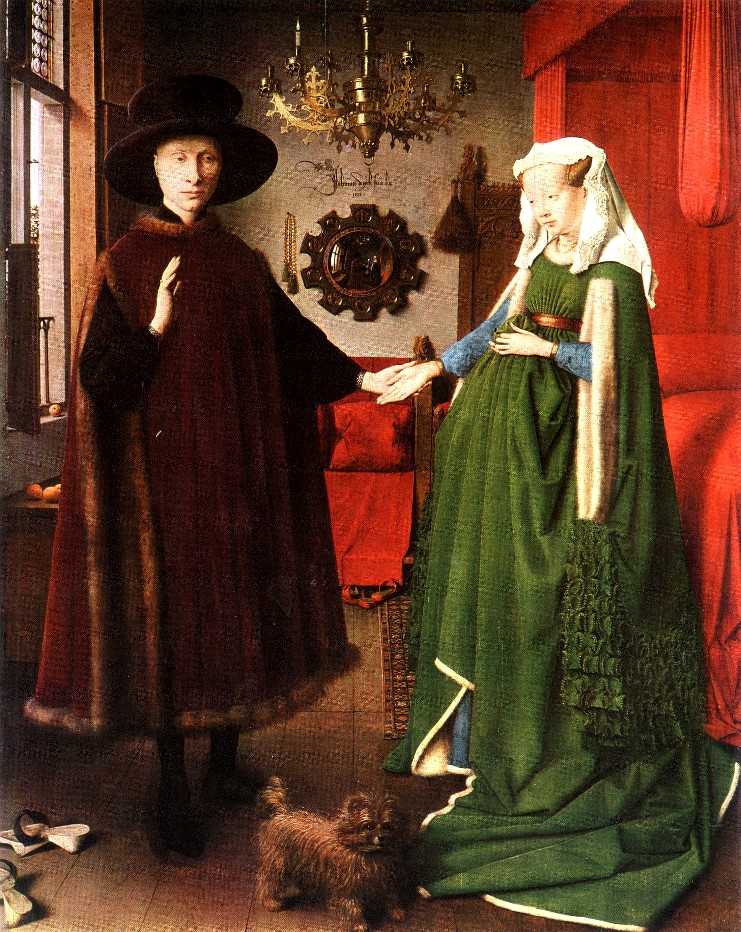
Foucault take one-- reflections
I have a confession to make. I looked long and hard for Foucault sparknotes, enotes, Foucault for Dummies--- anything to help make my scrambled notes from the book and Dusty's lecture make sense. I took four/five pages of notes from Dusty's talk, and I felt super smart at the end of the class, but at the end of the day, combining those to the few pages I read of the book, I was chilling in chaos.
I did find some lecture notes online, which proved to be a little helpful. They are still confusing-- a bit-- but they are helping me decipher some of my notes, giving me a light bulb moment with the Las Meninas chapter. I underlined these three lines on page 7: "it is a mirror. . . the painter is unable to see this looking glass shining so softly behind him. . .It is reflecting nothing." The guy's lecture (his name is John Protevi from LSU-- I posted the links below) says, "The Classical Age, based on representation, cannot represent representation to itself. It cannot see the light by which it sees; the fish cannot know it lives in water. Only historical difference can highlight the pre-suppositions of an age." He talks about a mirror in room taking in painter, the painted and the painting, the mirror (mimesis) can't reflect the situation. James talked about the mirrored image in the Velasquez painting in his blog. The "objective" observers (us) can see the images of the king and queen in the mirror, but those images are totally ignored by the spectators in the painting. He suggests that the people milling around are the true focus of the painting. I guess I'd agree in that they are in the focal spot of the piece. They are the brightest objects of the darker room, and their action draws the eye. But what I like about the mirror is that it wasn't the first thing I saw. The subjects of the mirror are nowhere to be seen, but I think it's possible that you can't see them, because they are not there. The mirror is the reflection of the painting the painter is working on. The objective viewer is not really us, it is the king and queen looking onto their subjects, looking at the mirror, which reflects the painting, which is a representation of them. Thus, the viewer is not really objective. That lack of objectivity goes back to the structure and language, but I can't explain.
But thinking of James' comment on the periphery, I like the guy hanging in the stairwell. He's such a creeper, hanging in the stairwell, but I like how the doorway frame mimics the frames of all the other paintings in the room. It's like the man in the doorway is also a painting, and that painting must be significant, because like the focal point of the room, it is also lit.
The links to the lecture notes:
http://www.protevi.com/john/Foucault/PDF/OT_I.pdf
http://www.protevi.com/john/Foucault/PDF/OT_II.pdf
I did find some lecture notes online, which proved to be a little helpful. They are still confusing-- a bit-- but they are helping me decipher some of my notes, giving me a light bulb moment with the Las Meninas chapter. I underlined these three lines on page 7: "it is a mirror. . . the painter is unable to see this looking glass shining so softly behind him. . .It is reflecting nothing." The guy's lecture (his name is John Protevi from LSU-- I posted the links below) says, "The Classical Age, based on representation, cannot represent representation to itself. It cannot see the light by which it sees; the fish cannot know it lives in water. Only historical difference can highlight the pre-suppositions of an age." He talks about a mirror in room taking in painter, the painted and the painting, the mirror (mimesis) can't reflect the situation. James talked about the mirrored image in the Velasquez painting in his blog. The "objective" observers (us) can see the images of the king and queen in the mirror, but those images are totally ignored by the spectators in the painting. He suggests that the people milling around are the true focus of the painting. I guess I'd agree in that they are in the focal spot of the piece. They are the brightest objects of the darker room, and their action draws the eye. But what I like about the mirror is that it wasn't the first thing I saw. The subjects of the mirror are nowhere to be seen, but I think it's possible that you can't see them, because they are not there. The mirror is the reflection of the painting the painter is working on. The objective viewer is not really us, it is the king and queen looking onto their subjects, looking at the mirror, which reflects the painting, which is a representation of them. Thus, the viewer is not really objective. That lack of objectivity goes back to the structure and language, but I can't explain.
But thinking of James' comment on the periphery, I like the guy hanging in the stairwell. He's such a creeper, hanging in the stairwell, but I like how the doorway frame mimics the frames of all the other paintings in the room. It's like the man in the doorway is also a painting, and that painting must be significant, because like the focal point of the room, it is also lit.
The links to the lecture notes:
http://www.protevi.com/john/Foucault/PDF/OT_I.pdf
http://www.protevi.com/john/Foucault/PDF/OT_II.pdf
Monday, October 10, 2011
Two truths and a lie
Truth 1: I did try out Prof. Sexson's challenge and lied to a loved one. I am the world's worst liar, so I spent three hours setting up the stage for the lie, making Joe think there was something weighty on my mind that I had to tell him. The lie itself didn't really compare to the three hours of him thinking something was seriously wrong. He's not terribly pleased with this class.
Truth 2: I was reading Sarah's blog about truth and lies, and I thought it was kind of neat that she brought up the Matrix, and how people escape from a dream world to a reality, because I was thinking about the same thing, but in an inverse kind of way-- I was actually wondering if dreams are the true reality we aspire to reach. When we did our debate, I thought lies are good for the day, but truth is for the night. Hedvig is the baby troll sneaked into the human nest, raised as their own. Her existence is the lie; but the lies in the house are merry ones. They are happy with an attic full of wild game, grandfather, son/wife, daughter. Maybe it is what they always dreamed of having or desired to have. Their dreams are their lies.
Lie: Fiction. I just finished Nafisi's book- she uses it a debating ground for the purpose and use of fiction. The Iranian government thought it should mainly be used as a vehicle for propaganda, but that seemed like such a literal and narrow minded view of the word. Nafisi thought fiction existed to make us question the "fragile unreality" we live in. Or not question really, but challenge? "We speak of facts, yet facts exist only partially to us if they are not repeated and re-created through emotions, thoughts and feelings. To me it seemed as if we had not really existed, or only half existed, because we could not imaginatively realize ourselves and communicate to the world." So "reality" isn't really real until we challenge it, rehash it, relive it and own it. We take what we see and re-create it into a kind of fiction.
I'd agree with Sarah that you can't truly peel truth from lies. Those ideas are interconnected by imagination; even if you try to crack that nut with every scientific discipline, with tons of facts, I just don't think you could really separate them.
Truth 2: I was reading Sarah's blog about truth and lies, and I thought it was kind of neat that she brought up the Matrix, and how people escape from a dream world to a reality, because I was thinking about the same thing, but in an inverse kind of way-- I was actually wondering if dreams are the true reality we aspire to reach. When we did our debate, I thought lies are good for the day, but truth is for the night. Hedvig is the baby troll sneaked into the human nest, raised as their own. Her existence is the lie; but the lies in the house are merry ones. They are happy with an attic full of wild game, grandfather, son/wife, daughter. Maybe it is what they always dreamed of having or desired to have. Their dreams are their lies.
Lie: Fiction. I just finished Nafisi's book- she uses it a debating ground for the purpose and use of fiction. The Iranian government thought it should mainly be used as a vehicle for propaganda, but that seemed like such a literal and narrow minded view of the word. Nafisi thought fiction existed to make us question the "fragile unreality" we live in. Or not question really, but challenge? "We speak of facts, yet facts exist only partially to us if they are not repeated and re-created through emotions, thoughts and feelings. To me it seemed as if we had not really existed, or only half existed, because we could not imaginatively realize ourselves and communicate to the world." So "reality" isn't really real until we challenge it, rehash it, relive it and own it. We take what we see and re-create it into a kind of fiction.
I'd agree with Sarah that you can't truly peel truth from lies. Those ideas are interconnected by imagination; even if you try to crack that nut with every scientific discipline, with tons of facts, I just don't think you could really separate them.
Subscribe to:
Posts (Atom)